|
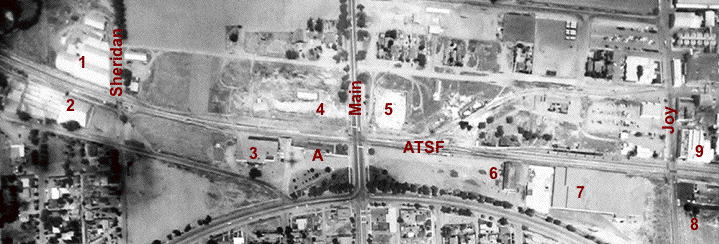
Historic Packing Houses Virtual Tour of Corona, CA Copyright 2006 by Jim Lancaster and Bill Messecar (Note: The latest additions to this page are in dark blue text.) Notice: The images - photographs, drawings, maps and track diagrams - presented in this web site are the property of the respective contributors and may not be used for any purpose without permission. For more information see Photo Credits and Restrictions. The city of Corona was founded in 1886 and known as South Riverside in its early days. The Santa Fe RR built a southern main line between Los Angeles and San Bernardino through Corona in 1887. This line was to replace the Temecula Canyon line that had been the main line from San Diego to San Bernardino but had washed out after heavy rains in the canyon several years earlier. The ex-Santa Fe tracks through Corona are now used by BNSF and Metrolink. Corona was laid out inside a wide circular boulevard (Grand Blvd.) three miles in circumference. An aerial photo taken in May 1955 shows this layout as well as many packing houses located along the Santa Fe right-of-way at the north end of the city (Figure 1). The southern side of Corona was left to citrus groves although several packing houses were built close to these groves in the 1930s.
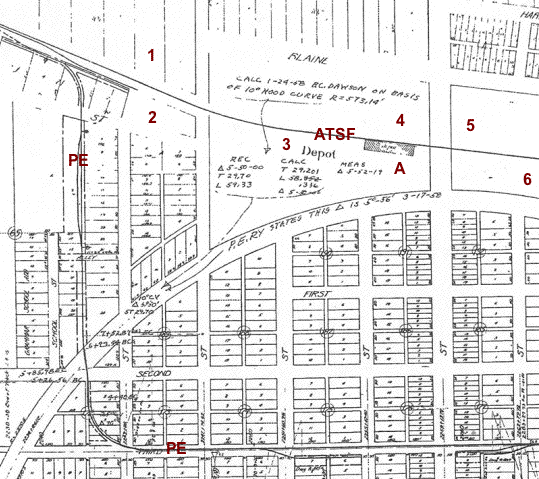
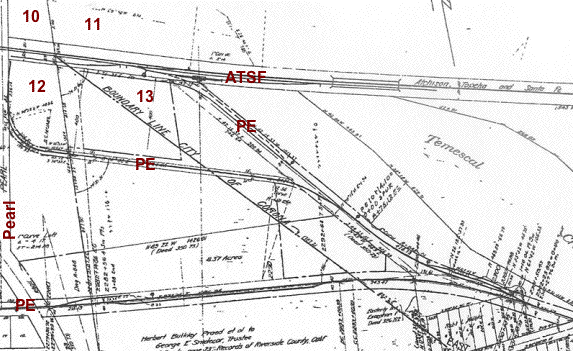
The Santa Fe built a large frame depot in Corona in 1906 to serve the growing town and industries. This depot was replaced by a modern stucco depot in 1937. It remained in service for 50 years until it was closed in the late 1980s. The Pacific Electric Railway operated a line from Riverside through Arlington to Corona, where it ran west on 3rd St. to Merrill. The section from Arlington to Corona was placed in service in February 1915. PE maps show three spurs for freight service that terminated next to the Santa Fe tracks in the packing house area. The PE was eventually merged into parent Southern Pacific and the line into Corona was abandoned by the SP in June of 1973. The PE Corona depot was on Third Street. Corona packing house and industry locations along the Santa Fe west of Pearl Street are identified by numbers in Figure 2. Some of these locations are also indicated in Figure 3 and additional packing house locations east of Pearl Street are identified in Figure 4. The Santa Fe station is at location A in Figures 2 and 3.
The packing house locations are also identified on two official Santa Fe track diagrams from the John Signor collection. These diagrams can be viewed in a separate browser window by clicking on the diagram name. Diagram JS-1 is undated but is probably from the 1915-1930 time frame. Diagram JS-2 is dated 1949 but has been revised at a later date, probably sometime between 1955 and the early 1960s. Note: These track diagrams may be wider than your display and, depending on your browser, you might have to click on the diagram to view it at its maximum size. The following table lists the names of the citrus packing houses or related industries at each of the locations identified in Figures 2-4 and in Diagrams JS-1 and JS-2. Multiple names indicate changes that occured over the period from about 1900 through the 1960s. Names in italics are those of non-citrus businesses occupying the location after closure of a citrus-related business. The packing houses are described in more detail following the table. The descriptions are based primarily on information contained on Sanborn Fire Insurance maps and Santa Fe track diagrams. The available Sanborn maps for Corona are dated 1900, 1907, 1911, 1928 and 1942.
The packing house descriptions that follow are based primarily on information contained on Sanborn Fire Insurance maps and Santa Fe track diagrams. The available Sanborn maps for Corona are dated 1900, 1907, 1911, 1928 and 1942. Packing Houses Up To 1900 By 1900, four packing houses had been built along the ATSF mainline on the north side of town. The first of these was the Sunset Fruit Co. (Location 1) located on the west side of Sheridan north of the ATSF tracks. It was renamed the Corona Citrus Association (CCA) around 1910 and underwent several expansions during the next 35 years before burning down in 1945 (Figure 5).
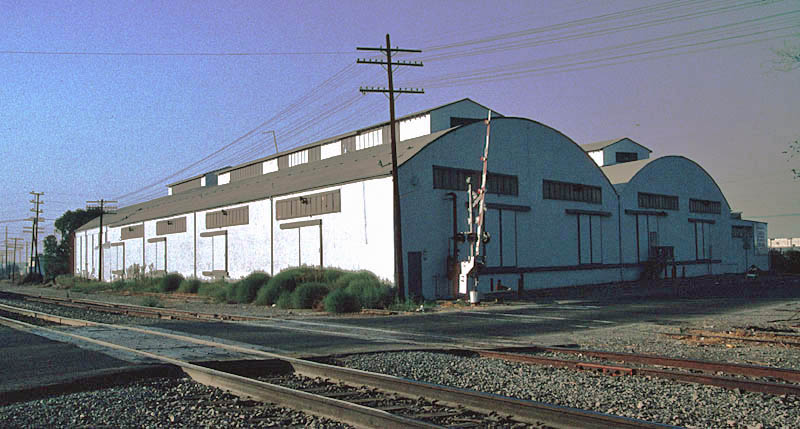
The CCA packing house was rebuilt in 1947 and a photo taken in 1956 shows it in operation under the Sunkist label (Figure 6). The CCA packing house had a capacity for 120 cars of fruit in two pre-cooler rooms and three lemon storage rooms. It was no longer in use as a packing house in 1990 (Figure 7).
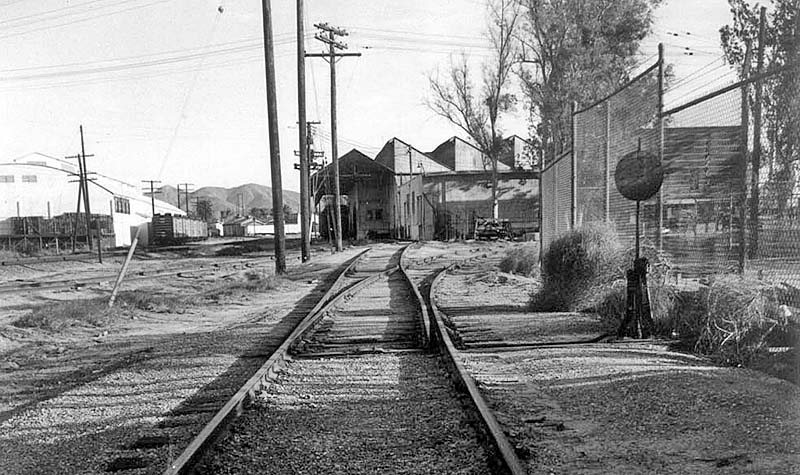
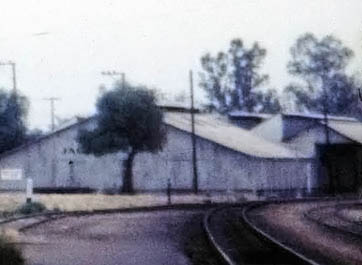
The W. H. Jameson packing house (Location 2) was the only packing house to operate in Corona under the same name over its entire history. This packing house was located west of Sheridan and south of the ATSF tracks across from CCA. The packing house was also served by the Pacific Electric Railway and was at the very end of the PE line from Riverside to Corona. The PE track came north from Third and Merrill Streets on a right-of-way west of Merrill. The route is shown in Figure 3 where the Jameson packing house location is indicated by 2. Bob Gaddie has provided a photo of the Jameson packing house from 1964.
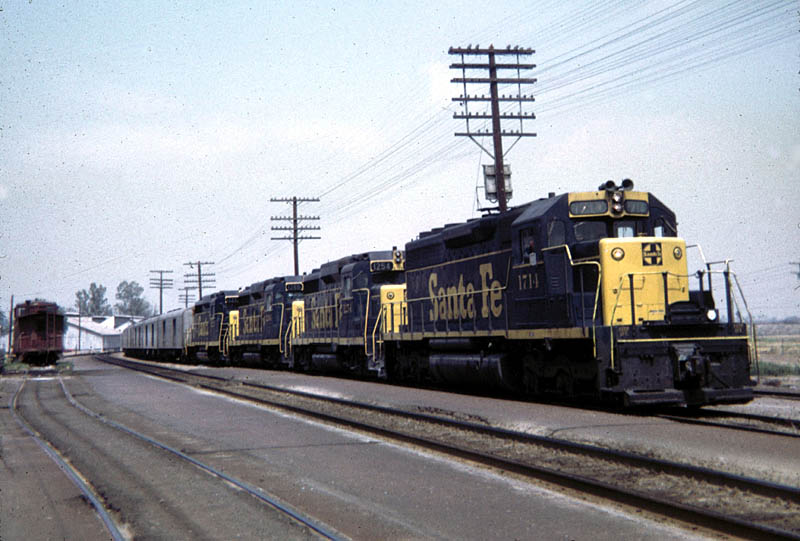
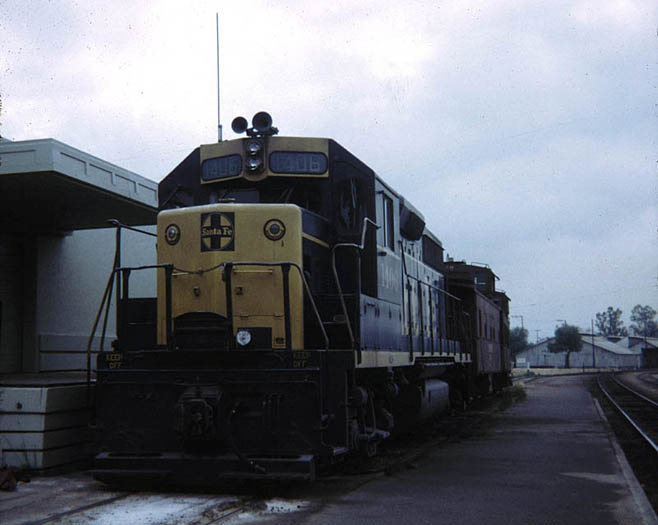
The following is Bob's descriiption of the photo: "I am standing on the Pacific Electric Corona line. The branch ends about 100 yards behind me. The track curving to the right is the PE "main line" and it will cross Railroad Avenue. Beyond Railroad Avenue is a passing track (see Figure 3). Then the line continues on private right of way to Third Street. It operates down the middle of Third Street to east Grand Boulevard where it regains private right of way and continues to Riverside. The track going straight in the photo serves theJameson Company packing house. The packing house can be seen at the end of the track. To the left of the PE track is the Santa Fe spur serving the packing house. To the left of the spur is the Santa Fe main line. To the left of the main line is the Corona Citrus Association packing house. Since it was January the refrigerator cars are for Navel oranges that were being harvested." A 1960s-era Sunkist map indicates that the Jameson packing house was by then part of the Corona Citrus Association. The packing house closed in 1963 and, after a fire in 1974, was torn down in 1975. The packing house shows in the background of Figures 8 and 9 - photos taken by Cliff Prather in 1968.
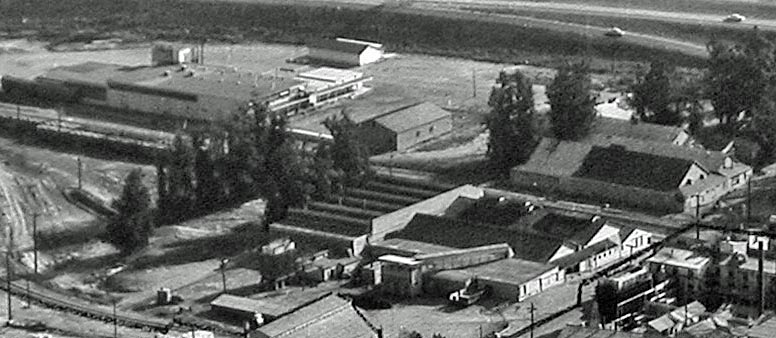
The following pair of somewhat fuzzy images are close-ups of the Jameson packing house cropped from Figures 8 and 9.
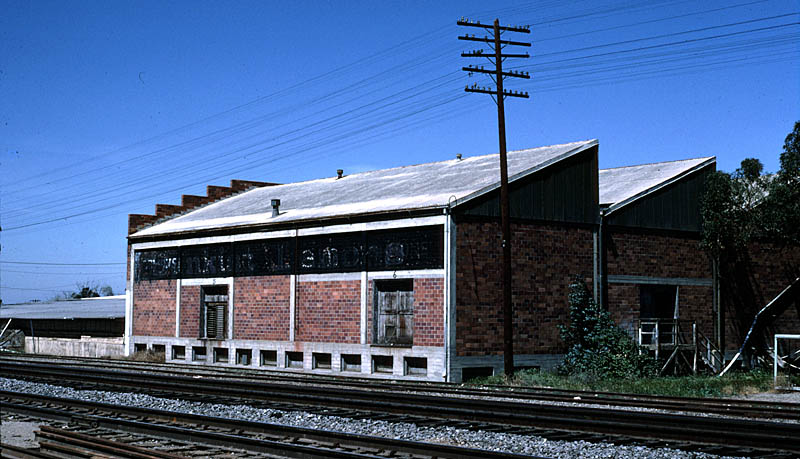
The Flagner packing house (Location 9) was located east of Joy and north of the ATSF tracks. Later Sanborn maps change the name to Flagler. This packing house disappeared when the Exchange Lemon Products plant was built in 1915 at the same location. The Thieme Lemon Products plant (Location 5) was built in 1905 and was located on a spur east of Main St. on the north side of the tracks. By 1907 the packing house had changed its name to Orange Heights Fruit Association. The packing house was greatly expanded in the early 1920s and by the 1940s was renamed the Corona Foothill Lemon Co. - not to be confused with the Corona Foothill Lemon packing house located east of Pearl and north of the ATSF tracks (Location 10). In fact, several companies owned two packing houses and used one to pack oranges and the other lemons and then bought other properties and moved their operations to larger or better facilities when the opportunity arose. 1900 to 1910 By 1910 five additional packing houses had been built along the ATSF tracks. The Corona Packing Co. (Location 3) was located just west of the ATSF Corona Depot but only operated a few years before changing names to Randolph Fruit Co. By 1928 this packing house was named the Riverside County Select Groves after some expansion in size. By the 1940s it was further expanded and given a new name, the Corona Mutual Groves Inc. The California Citrus Union packing house No. 39 (Location 4) was built directly across the tracks from the ATSF depot just west of Main St. By the 1920s this packing house had been converted to a box factory known as the Corona Box Company. It burned down during WW2. The Boston and South Riverside Fruit Co. packing house (Location 7) was built west of Joy, south of the ATSF mainline and north of the end of Howard St. In 1911 it was the Orange Heights Fruit Association Orange packing house which expanded in the 1920s. It was destroyed by fire on September 21, 1941. The Corona Lemon Co. packing house (Location 10) east of Pearl and north of the ATSF was also built during this time. Corona Lemon expanded in the 1920s and continued operations through the 1940s packing for Sunkist. A good view of the north side of Corona Foothill Lemon packing house is shown in Figure 10. The older wood part is at the right and the newer brick part with the sawtooth factory roof is at the left (Locations 10 and 11). Note the chute that goes across the roof leading to the cull bin. The packing house was sold to Sunkist in 1956.
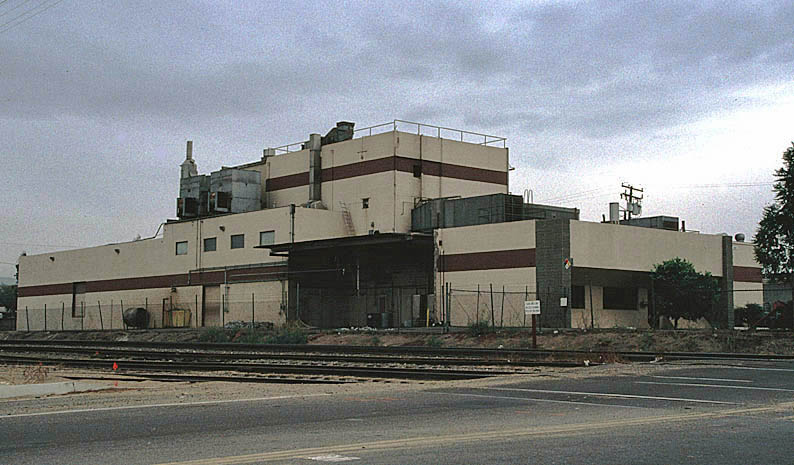
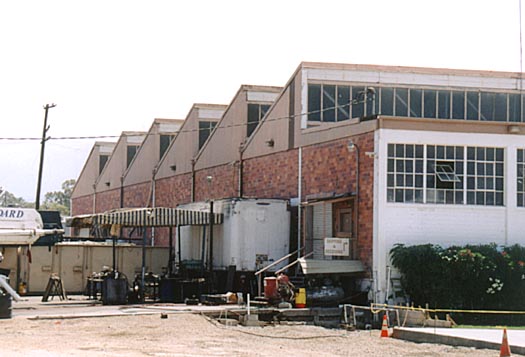
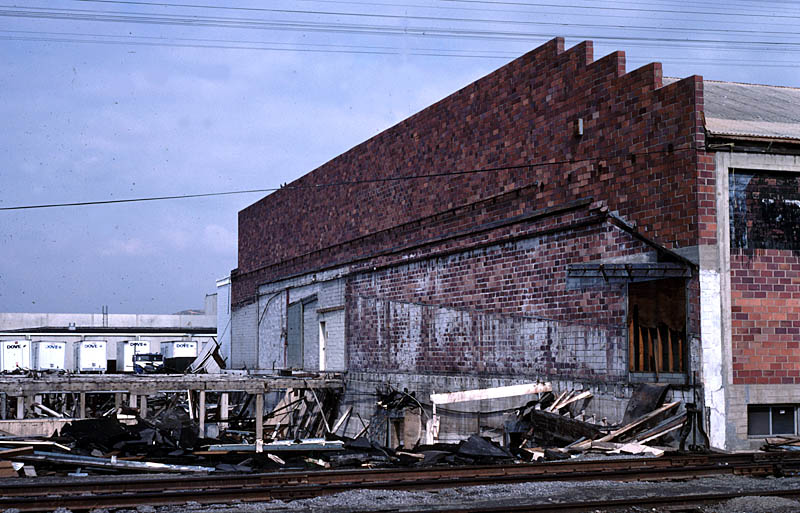
The Corona Foothill Lemon packing house closed in 1966 and a part of the original wooden structure was demolished in 1972. Figures 11-15 show the remaining parts of the packing house up to 1990. A new Corona Foothill Lemon packing house was built in the post-WW2 period south of the Santa Fe tracks at Howard St. (Location 7). The roof of the packing house can be seen in Figure 2 and at the very bottom of Figure 16.
The Call Fruit Co. packing house (Location 12) was also built prior to 1907 east of Pearl St. and south of the ATSF tracks across from the Corona Lemon packing house. It is shown across from Corona Foothill Lemon in Figure 10. The location appears as a vacant lot in Figure 16.
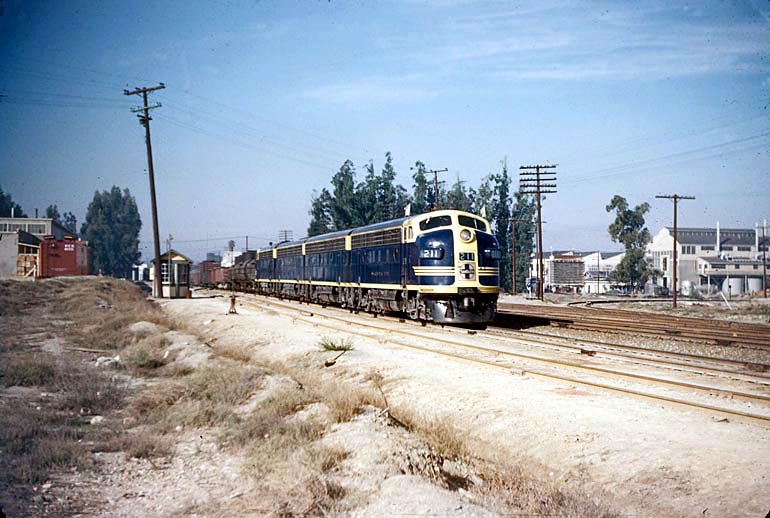
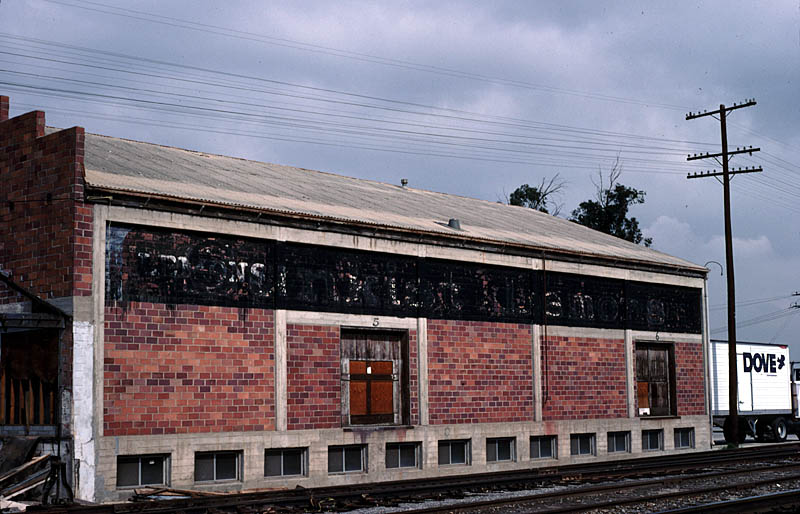
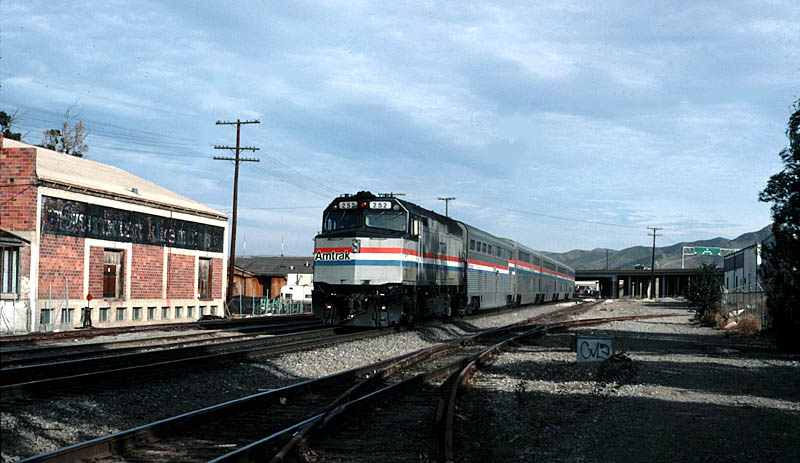
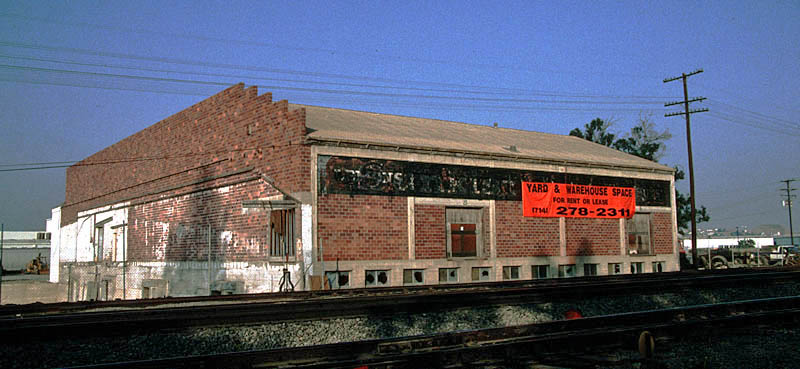
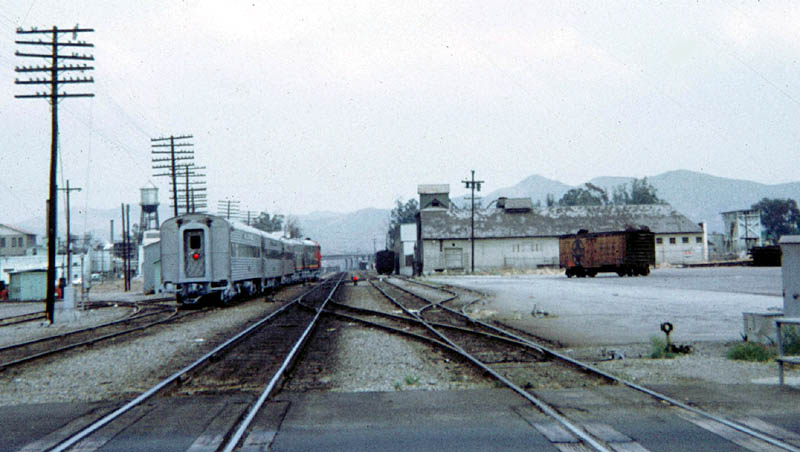
The Call Fruit Co. packing house was expanded within a few years with additions of lemon curing and packing space. By 1928 it had been renamed the A. F. Call Estates Orange & Lemon packing house and continued in operation through the 1940s. Both the Santa Fe and the PE served this location. 1911 By 1911 one additional packing house shows up east of Main St. and south of the ATSF main line but without a name or railroad spur so it may have been under construction (Location 6). By 1928 it was identified as the Sparr Fruit Co. The 1942 Sanborn map shows a fertilizer storage building at the same location. A building on the same site is shown in Figure 7 at the right behind the Santa Fe reefer. The photo also shows the eastbound Grand Canyon leaving Corona in April 1968, shortly before the train lost its name and was switched to the Santa Fe’s second district line via Pasadena.
1915 The largest citrus facility in Corona was the Exchange Lemon Products Co. (Figure 18). It was created in 1915 as an outlet for cull lemons. Products included citric acid, oil, pectin and lemon juices. The first Exchange Lemon Products plant (Location 9) was located east of Joy on the north side of the ATSF main line.
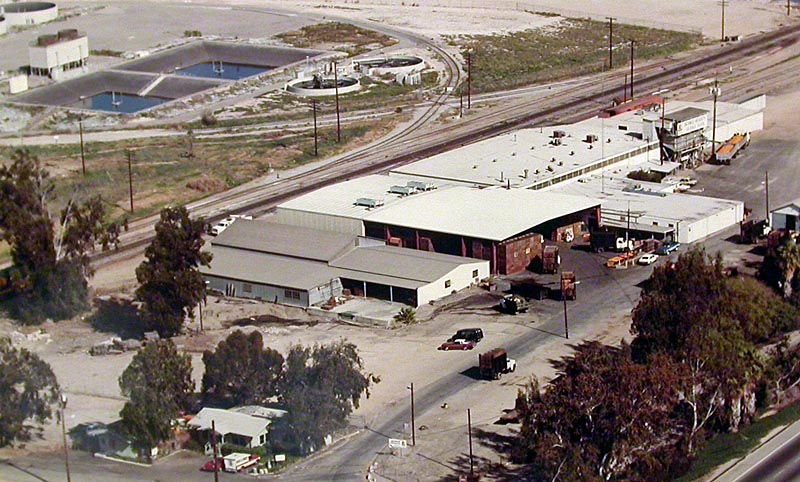
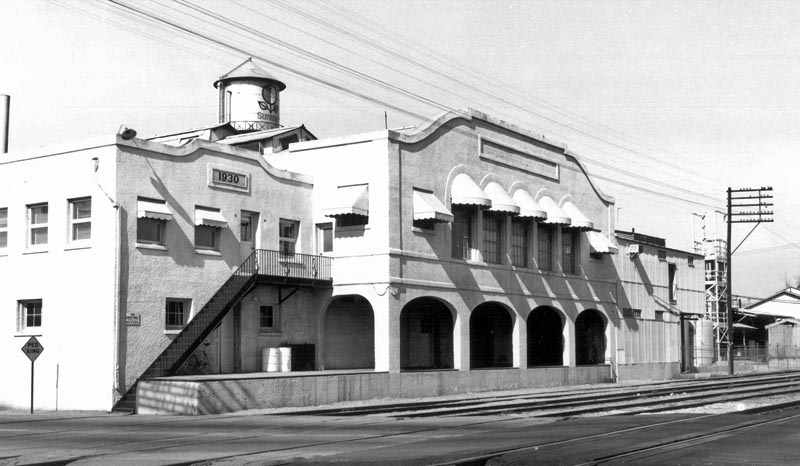
That structure was replaced by a much larger structure built in 1930 that extended across Blaine St. on the east side of Joy (Figure 19).
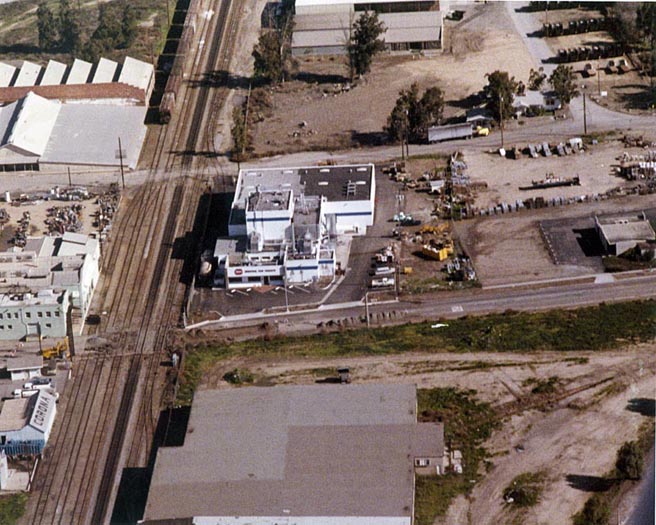
This aerial shot taken several years later shows the extent of the facility in full operation at its peak (Figure 20).
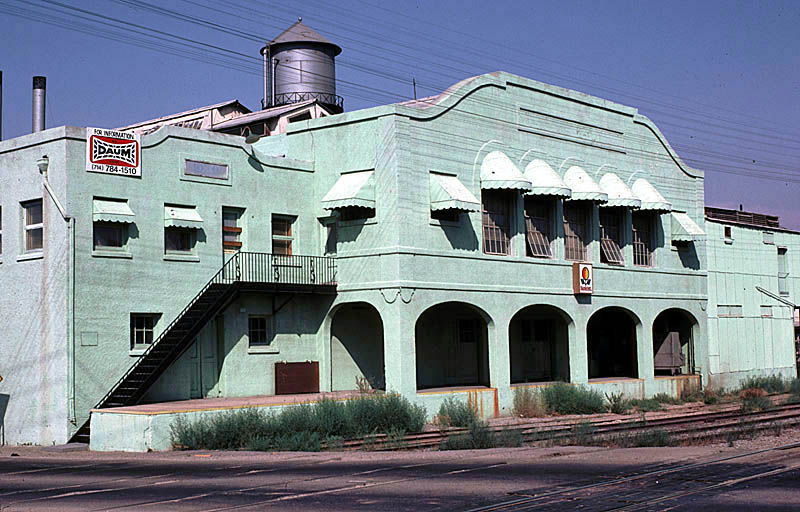
Figure 21 shows Exchange Lemon Products in 1983. Note the date 1930 on the wall below the water tank.
Exchange Lemon closed in 1984 when Sunkist consolidated its juice operation at its other plant in Ontario, California (Figure 22).
Another photo from the Corona Library collection shows how cull lemons were transported to Exchange Lemon in box cars and unloaded from each car similar to unloading grain from box cars at the time (photo 23).
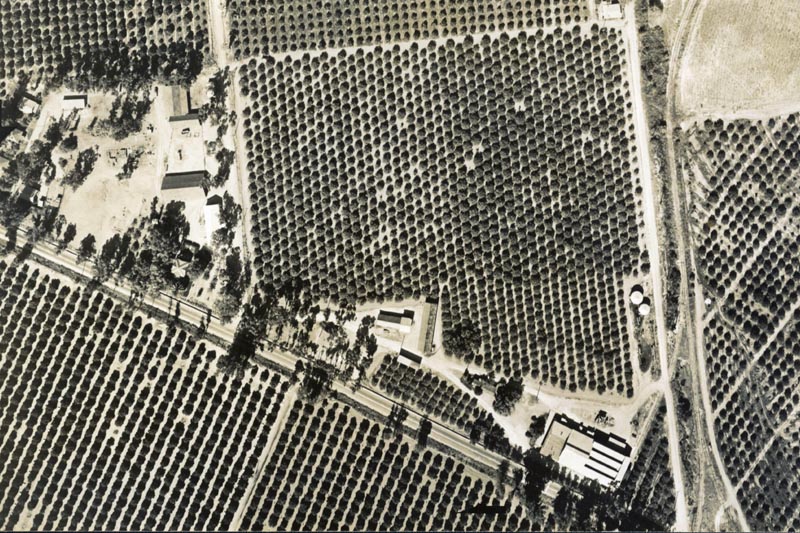
1920s Two new packing houses were built in the 1920s. The Charters-Davis Co. Lemon packing house was located 3 miles SE of downtown Corona on Ontario Ave. An aerial shows this packing house, the Santa Fe spur track, and the surrounding citrus groves (Figure 24). This packing house was expanded and renamed R. H. Verity Sons and Co. by the 1940s. This packing house was closed in 1948 and burned to the ground in 1989. Development has removed most trances of the packing house, Orange Groves and the Santa Fe spur tracks.
A large packing house was built on a spur next to Chase Dr. (formerly Lemon) 4 miles SE of Corona and was known as the American Fruit Growers packing house. Bob Gaddie has provided a photo of the packing house from 1937.
Bob Gaddie provided this description for the photo: "This is the American Fruit Growers packing house located at the end of Santa Fe's 'mining spur.' The mining spur left the Elsinore district about a mile south of Pophyry. It served two quarries and three packing houses. This packing house was located on Chase Drive and Compton Avenue. The spur paralleled Compton Avenue.You can [just] see the tracks of the spur crossing Chase Drive. The photographer is standing along Chase Drive looking west. The spur went about 1/4 mile to the left of the photographer. At this location were smudge oil tanks. Tank cars of oil would be delivered during the winter. Sometime after this photograph was taken the open dock of the packing house was enclosed. During the late 1940s or early 1950s American Fruit Growers became American National Foods. The packing house closed in the late 1950s or early 60s. In the late 1960s the building became the headquarters of the Jameson Ranch." Bob Gaddie's family was closely associated with the American Fruit Growers packing house. His family moved to Corona in 1915 and both of his grandfathers were involved in the citrus industry. His dad was a ranch foreman. His uncle was the packing foreman at American Fruit Growers until just before it closed and his mother worked in the office in the 1930s and 40s. When Bob was born his father worked for American Fruit Growers but when Bob was about four years old his dad took a job with the A. F. Call Estate. Bob wrote "We moved down to the old A. F. Call house on Ontario Avenue. The Call ranch was immediately west of the Verity Ranch. In the aerial photo of the Verity packinghouse I can see the roof of our house (Figure 24). We lived in that house until 1966." The Borden Milk Co. (Location 8) built a plant east of Joy and south of the Santa Fe for producing powdered lemon juice (Figure 25). A note on the Sanborn map says “it operates 4 months in the year.”
1940s A new Orange Heights Orange Association packing house was built east of the former A. F. Call packing house in 1942 (Location 13) after their packing house at Howard St (Location 7) burned down in September 1941. The packing house is shown in Figure 26. A Sunkist map from the early 1960s indicates that at that time Orange Heights Orange Association also operated a packing house at the site of the former A.F. Call Estates (Location12).
A Pacific Electric spur off their main line between Riverside and Corona originally served this packing house, the third for Orange Heights in Corona (Figure 27). After the PE discontinued freight service to Corona a new spur came off the Santa Fe main line to serve this packing house. The packing house continued in operation until 1998 and was still standing in 2006.
The relationship between the Corona Foothill Lemon Ass'n (Location 11), A. F. Call Estates (Location 12) and the Orange Heoights Orange Ass'n (Location 13) is somewhat complicated. Bob Gaddie has provided some background: "In
the late 1940's my dad took a job with the Call Estate as a foreman. In
the early 1950s the Corona Foothill Lemon Company took over the Call
Estate. I recall my dad saying that they leased the ranch. They may
have bought it at some point. My dad went to work for Foothill as
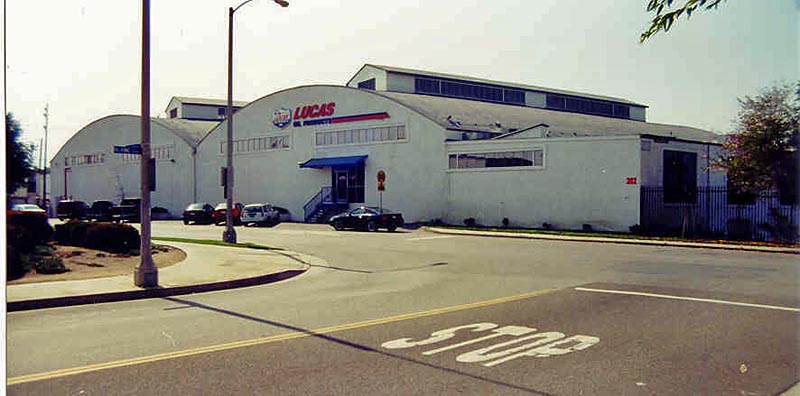
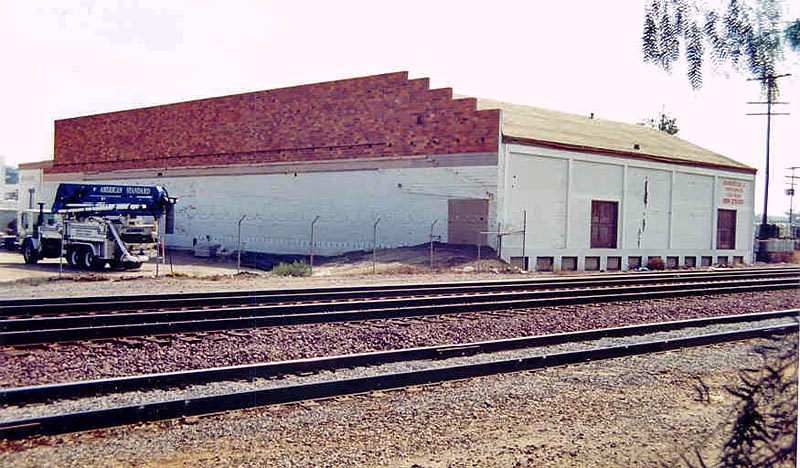
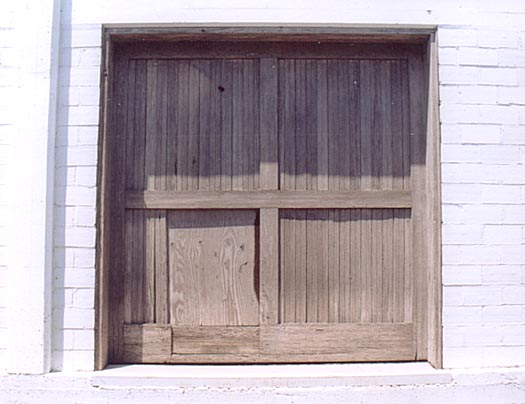
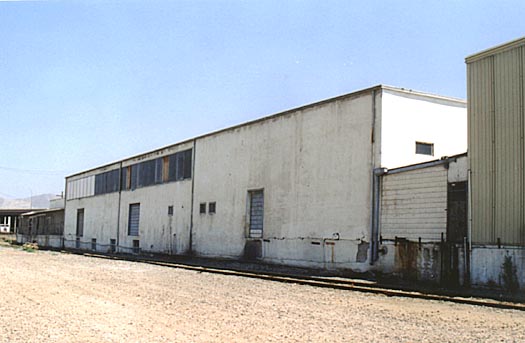
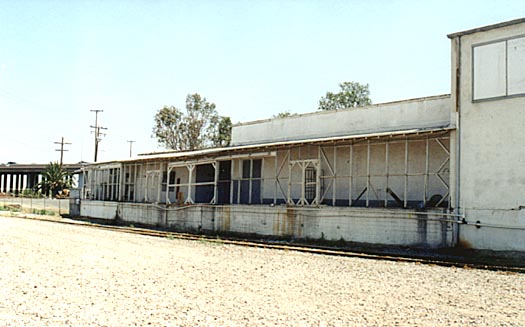
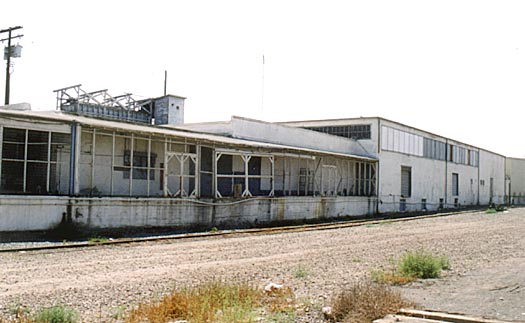
foreman over the former Call orchards. "Foothill packed their oranges and grapefruit through Orange Heights. After my Dad went to work for Foothill he was put in charge of coordinating and supervising [the] harvest for Orange Heights. In the 1950s Orange Heights began packing some fruit from Orange County. The fruit could not be packed in the Orange Heights packing house. I believe this was due to some disease or insect problem in Orange County. It may have been due to the Tristeza (Quick Decline) outbreak at that time. Each summer the Call house would be opened for a few weeks to pack the fruit from Orange County. I rode with my dad frequently in the summer. I can recall going to the Call house when it was operating. Unlike the Orange Heights house the Call house was an antique. The field boxes were dumped one at a time (the Orange Heights house had a continuous dump line). The Call house was very dark. The only light I can recall was over the grading table. The fruit was moved around the house on hand trucks. The Orange Heights house used conveyer belts to take the packed fruit into the cold room and move it out of the cold room into the refrigerator cars. During the time the Call house was operating the PE would spot a couple of refrigerator cars on the spur that ran along Pearl Street next to the Call house (see Figure 4). The Call house also had a Santa Fe spur. I have no idea what was the last year the Call house operated." Corona Citrus Association, Jamison packing house, Corona Foothill Lemon on Joy and Pearl and both Orange Heights packing houses were packing under the Sunkist brand in the 50s and early 60s. Postscript As of 2006, only three of the former Corona packing houses are still standing. The Corona Citrus Association building is now the headquarters for Lucas Oil Products (Location 1), which started operation in Corona in the 1990s. Figures 28 and 29 provide a track side view where former loading doors can still be seen while Figure 30 shows the front looking SW.
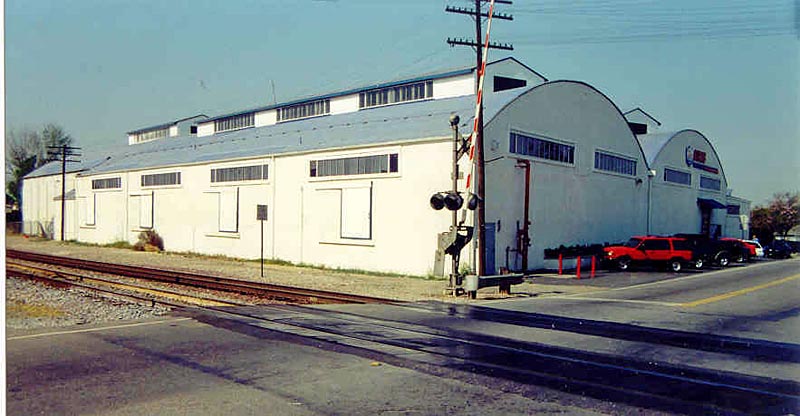
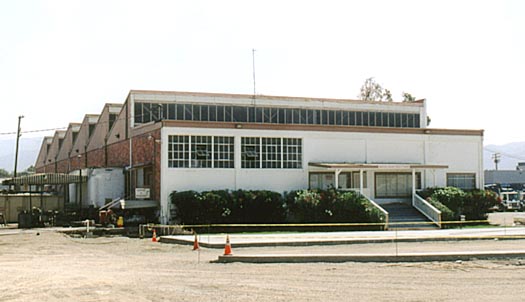
The eastern part of the Corona Foothill Lemon packing house (Location 11) is now owned by Pacific Utility Installation. Figures 31 and 32 show this remaining part of the packing house from track side while Figures 33 and 34 show the north side and northeast corner.
The Orange Heights packing house (Location 13) is now Newport Farms. (Figures 35-38).
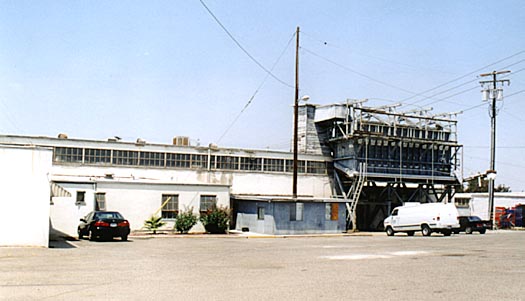
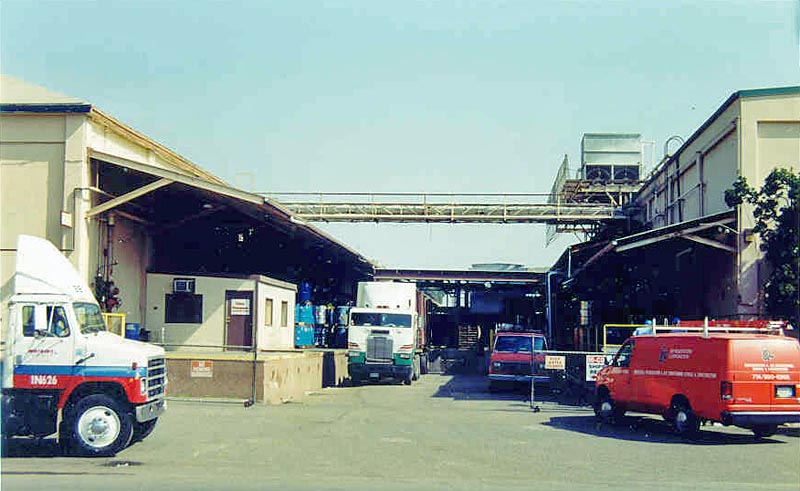
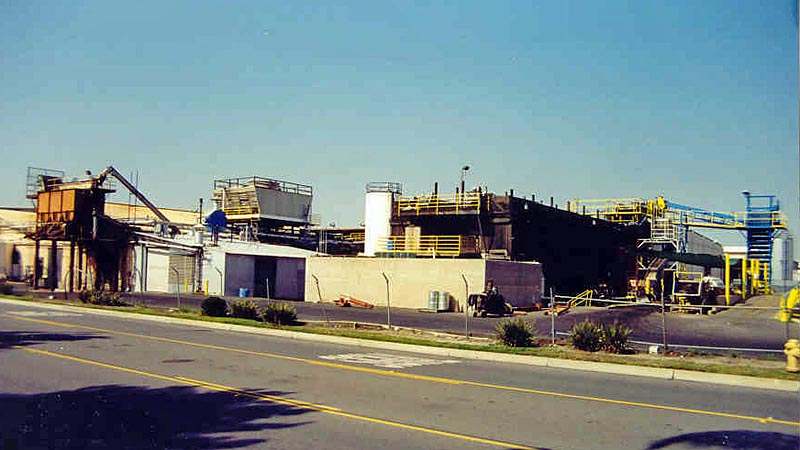
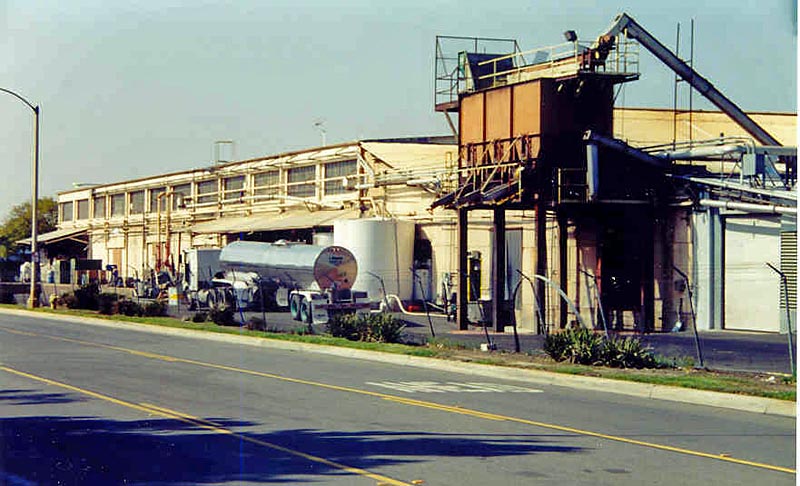
The Exchange Lemon Products facility north of Blaine was the only part remaining in 2003 (Figures 39-41) but had been renamed Hi-Country Juice. It was closed by the following year. The final remains of the Exchange Lemon plant were vacant in 2005 and bulldozed in 2006.
To tour other Riverside County cities, or other counties, return to the Virtual Tour of Riverside County Page. Return to the Historic Packing Houses and Other Industrial Structures in Southern California Home Page. Return to the Trains Page. This page was last updated on 9 February 2007. The latest revisions are in dark blue text. |






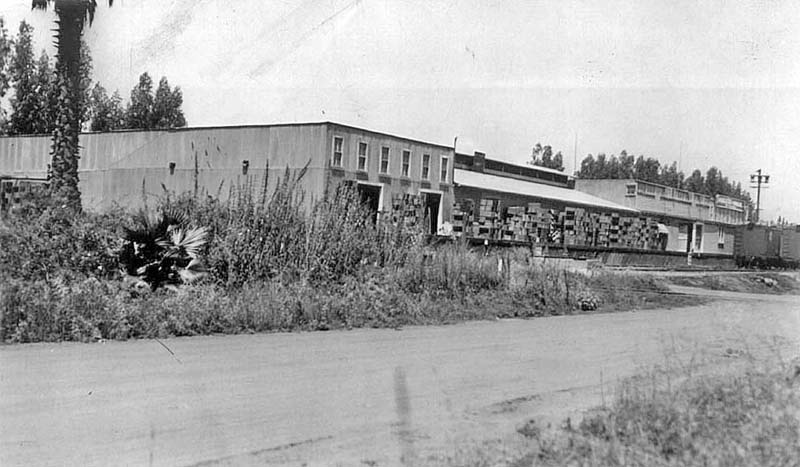 American Fruit Growers packing house. June 29, 1937. Photographer unknown, Robert Gaddie collection.